
Tifton is one step closer to repurposing a former industrial site as a community asset and gathering space, thanks to the University of Georgia.
Located on nearly 10 acres on the southern boundary of downtown Tifton, the Short & Paulk Building Supply Company space was once a transportation hub for lumber and agriculture. The site is bordered by an active railway and within walking distance of downtown and neighborhoods.
Mayor Julie Smith said the city, the Tifton Urban Redevelopment Agency (TURA) and the Downtown Development Authority (DDA) saw the site as an investment opportunity.
“It became very apparent that we needed to do better as a community and embrace this area versus just ignore it,” she said. “The property could really be a catalyst if we can do some kind of public-private partnership and get it back on the tax digest to create an area right for development.”
Georgia’s Rural Center provided a $100,000 grant to the city to fund the project.
“There was only one group in our minds that we wanted to partner with, and that was the Carl Vinson Institute of Government,” Smith said.
The city engaged with the Institute of Government’s Renaissance Strategic Vision and Planning (RSVP) team. For more than a decade, the award-winning program has transformed numerous communities through public engagement and visioning.
“We provide government and community leaders with a starting point for exploring what they want to do with a project,” said Danny Bivins, assistant director of Infrastructure and Community Resilience at the institute.
Engaging UGA knowledge and student energy
The Short & Paulk project also provided an opportunity for UGA students to learn firsthand how community engagement shapes urban development.
“It was great timing because we had ideas from the community and needed creative minds to bring them to life,” Bivins said.
He reached out to James Schulte at the UGA College of Environment and Design. Schulte is a landscape architecture lecturer who has collaborated with the Institute of Government in the past. His community design studio class took on the Tifton project and developed four master plans.
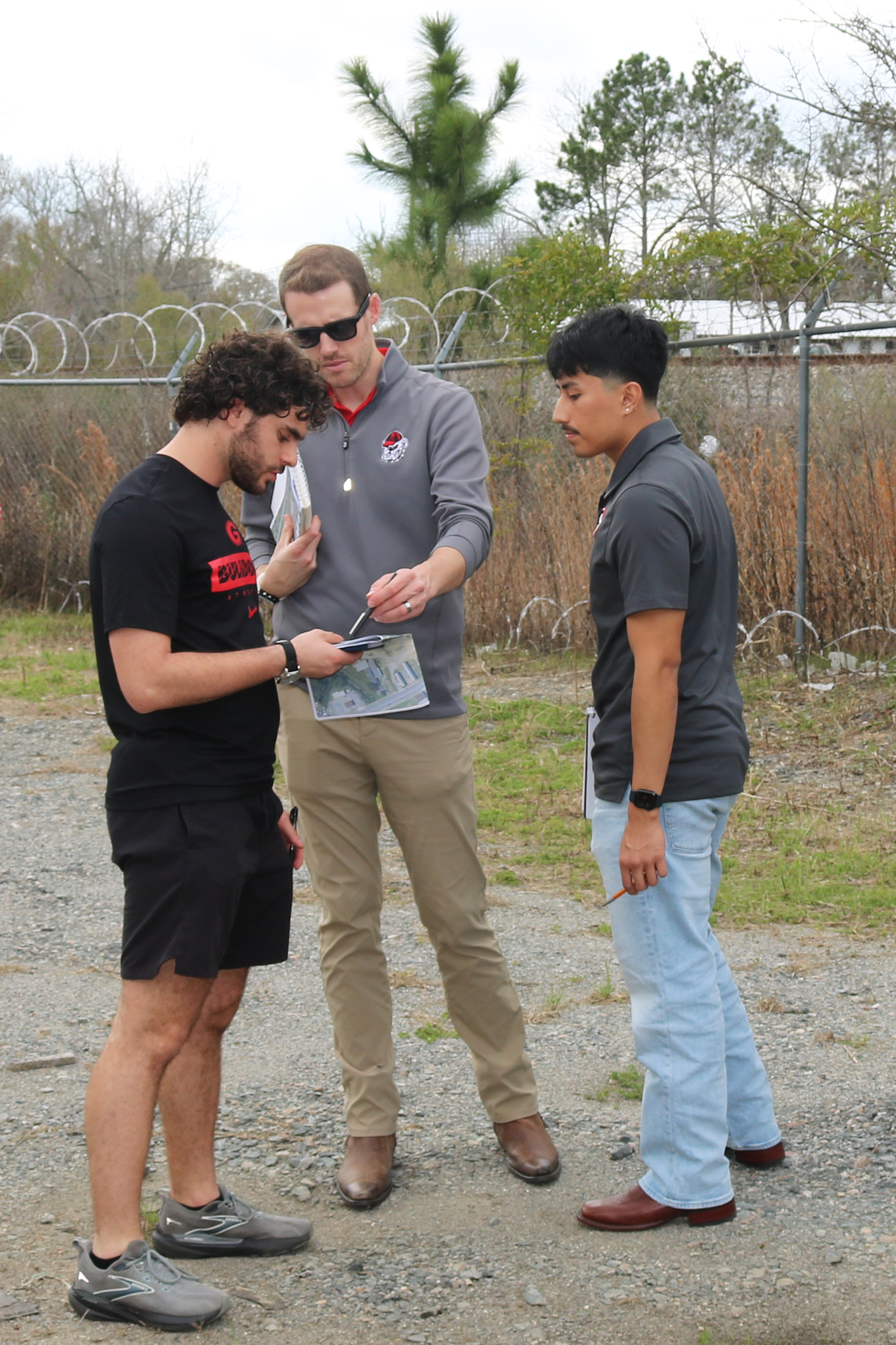
 UGA faculty and students tour the Short & Paulk Supply Company in Tifton. “This was the first time we’ve visited a site, so it was cool to have that
different experience,” said student Rachel Newman. “I felt more into this project because we saw it in person, and I can see the potential.”
Students found that while adaptive reuse of industrial sites isn’t a new concept, each project brings its own challenges. In Tifton, the site included several abandoned buildings, extensive concrete and floodplains.
“The way the site had been planned before was obviously not for a park space,” Schulte said. “Trying to mesh those two worlds together was a fun, interesting challenge that makes students really think about what they’re doing.”
Designing and adapting for tomorrow
Students reviewed information from surveys, focus groups and one-on-one interviews conducted by the Institute of Government before embarking on the design process.
“The biggest challenge was coming up with a design that we all agreed on, something that was cohesive and that would benefit the community using all of the suggestions from the public question panel,” said Isabella Eastabrooks, a landscape architecture major from Ball Ground.
On a field trip to Tifton to tour the property and meet with community members, students were able to assess train noise, watersheds and shade opportunities.
After reviewing the site and researching inspiration, students developed programming ideas for the Short & Paulk property. Their designs included extensive renderings with suggestions for lighting, green spaces and family-friendly activities such as a splash pad, a mini-golf course and an educational community garden—all ideas culled from community responses.
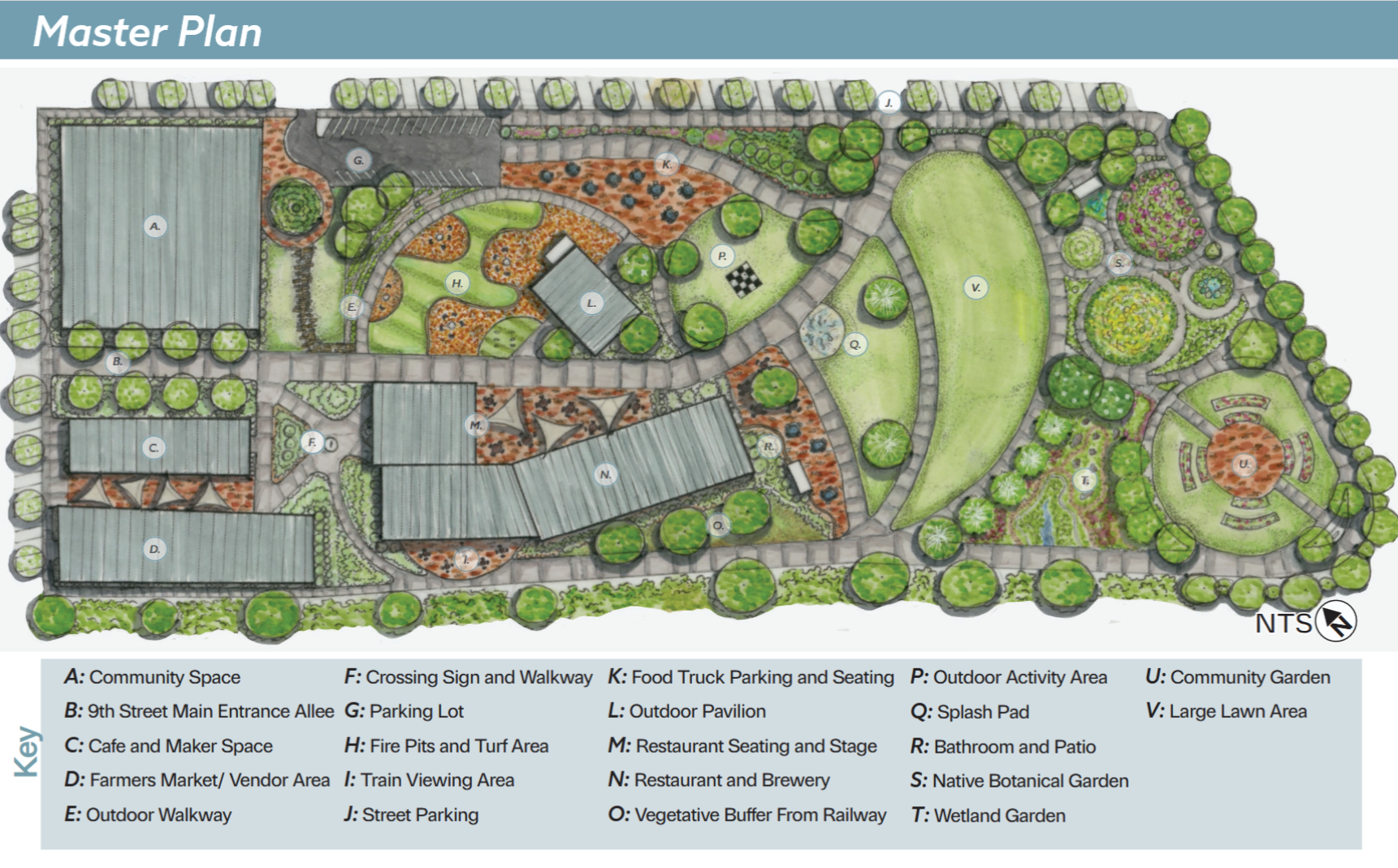 Students developed four master plans for the Short & Paulk property. The renderings (sampled above) include suggestions for lighting, green spaces and
family-friendly activities such as a splash pad and an educational community garden—both ideas culled from community responses.
“A big thing for us was sustainability and creating something that people can enjoy for a really long time, where people can come and enjoy without having to pay—a true community space,” Eastabrooks said.
In addition to landscaping and making the site more naturalistic, students considered streetscapes, connecting the site to downtown, and creating gateways into the repurposed space.
One student team incorporated an active railway that borders the site into their design.
“We wanted to make the train an amenity rather than just putting up a bunch of trees that aren’t going to really buffer the sound,” said Quin Pham, a landscape architecture major from Commerce. “You can’t stop the noise from coming through, so if you can, make it something people can experience.”
Mayor Smith appreciated the students’ ingenuity and creativity.
“The ideas and concepts of what the site could be are interesting,” she said. “They had a unified theme, but they were all unique too. It was neat to see how the different groups worked together.”
A blueprint for the future
Now, the Short & Paulk Renaissance Project steering committee will pore over the UGA
student designs as it moves forward with developing the site. As they do, Smith and
her fellow Tifton leaders remain committed to engaging the community.
“We really want people to feel like they had an opportunity to come and share—whether it’s good, bad, ugly, or something so far out in left field we could never do it, but at least they know they’ve been heard,” she said.
Such collaborative spirit mirrors the philosophy of the Institute of Government and its public service mission.
“We listen to the community, integrate their ideas with proven planning and design practices, and help transform those ideas into a shared vision,” Bivins said. “The final plan belongs to the community because they created it.”
In his work with the Institute of Government, CED lecturer James Schulte (pictured left, with students Ethan Levine and Jesse Gonzalez) emphasized the benefits of service-learning experiences for students.
“It allows them to communicate with community stakeholders, and the opportunity to work outside the walls of our building on real projects, so that when they enter internships or entry-level positions, they have better knowledge of how projects run in the real world,” he said.
For more about the Renaissance Strategic Vision and Planning process, visit https://www.cviog.uga.edu/services/community-planning-resilience/rsvp.html
For more about the UGA College of Environment and Design, visit https://ced.uga.edu/