Effective disaster management depends on relationships built long before a crisis hits.
That message—the importance of developing connections during normal operations, or “blue sky days”—was a key takeaway from the 2026 Disaster Resilience Across the Chattahoochee River Valley Conference in Columbus, Georgia.
The conference was hosted by the Georgia Alabama Partnership for Sustainability (GAPS) in partnership with the UGA Carl Vinson Institute of Government, Fort Benning, Columbus Emergency Management & Homeland Security, and surrounding communities. Its primary goal was helping the region prepare for gaps in critical infrastructure services before, during and after a disaster.
The event brought together more than 200 attendees, including community and military partners, disaster management practitioners and subject matter experts to strengthen connections and discuss energy, water, utilities and other emergency needs.
Management for both the 2025 and 2026 conferences was coordinated by Ileeia A. Smith, faculty member at the Institute of Government, working through the Defense Community Resilience Program in partnership with Fort Benning and regional stakeholders.
“No city, county, state or agency can do it alone. Everything we accomplish is built on relationships and partnerships, and that’s one of the reasons I appreciate the mission behind GAPS so much,” Georgia Emergency Management & Homeland Security (GEMA/HS) Director Josh Lamb told conference attendees. “The idea of bringing Georgia and Alabama together to focus on disaster resilience and the sustainability of critical systems is incredibly important.”
GAPS was created to address the region’s emergency management and disaster preparation goals, centering on Fort Benning’s critical mission sustainment goal to sustain critical systems, such as energy and water, for at least 14 days for both the installation and its supporting civilian communities.
Fort Benning Director of Public Works Kirk Ticknor said last year’s conference led to increased efforts to provide backup power sources to critical assets on the installation. He praised the event as an opportunity to exchange ideas with neighboring communities and organizations.
“Fort Benning’s military mission is dependent upon its community partners,” Ticknor said. “Seventy percent of our soldiers and families live off post. For them to carry out the mission in the event of a natural or man-made disaster, these communities need to stay as functional as Fort Benning.”
Plenary speakers discussed regional readiness, infrastructure and partnerships. The conference also offered breakout sessions, including wildfire resilience, intergovernmental agreements and more.
Jerica McCrary, director of Compliance and Risk at Valley Healthcare System, attended the first Disaster Resilience Across the Chattahoochee River Valley Conference in 2025 and returned this year for information to help the health system plan to care for rural patients during disasters.
“The capacity, the networking, and just the camaraderie—it’s really growing. I really appreciate the services and resources that I’ve been able to take back to our organization,” she said.
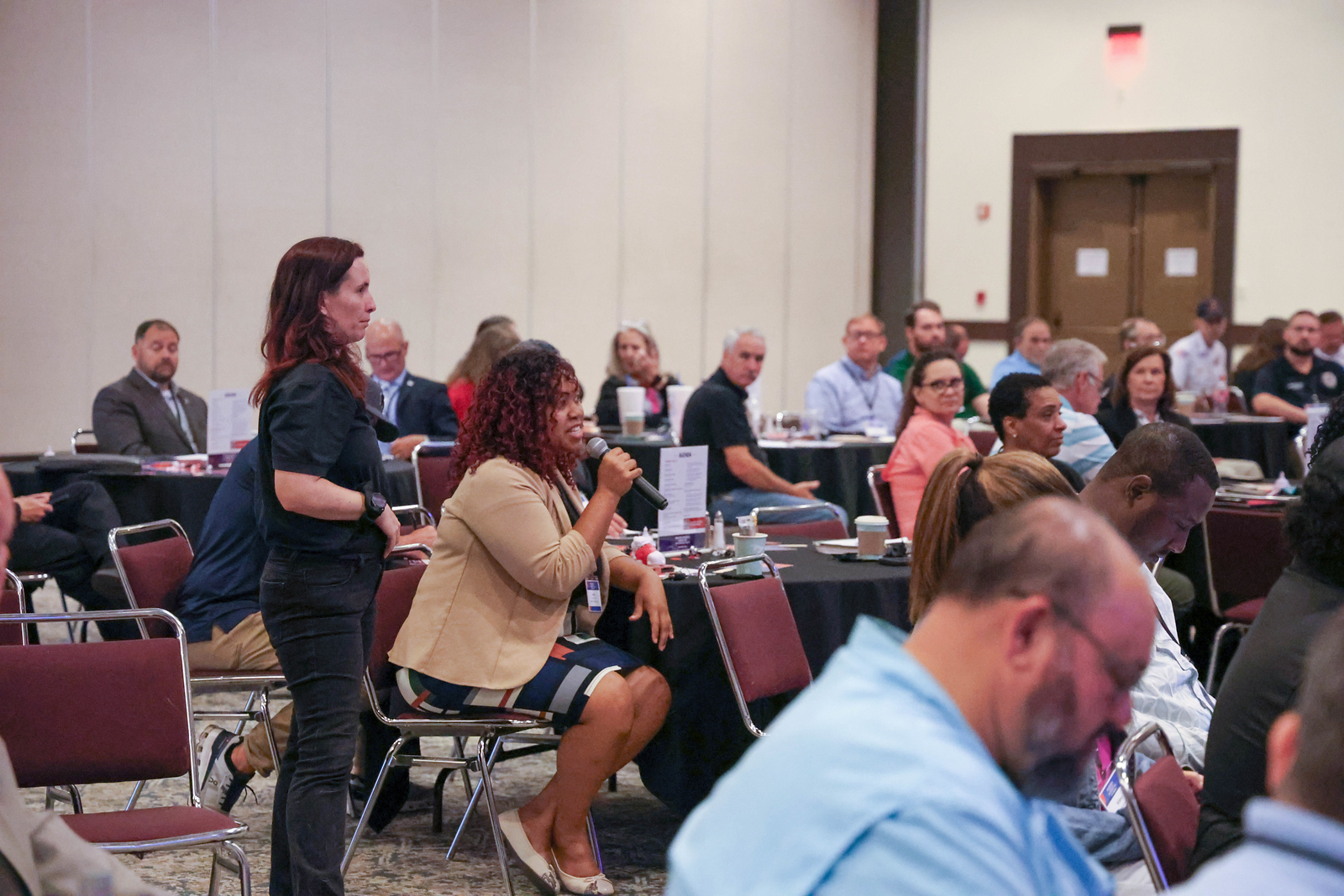 Jerica McCrary of Valley Healthcare System asks a question during a plenary session.
New this year, GAPS convened three workgroups to address energy, water and emergency management. These groups, led by faculty from both the Institute of Government and the UGA College of Public Health’s Institute of Disaster Management, met during the conference to discuss the region’s needs and identify priorities for the coming year.
“It’s very important that we have great working relationships with all of our area partners. The conference makes it easy to get together and share best practices,” said Columbus-Muscogee County Emergency Management and Homeland Security Director Chance Corbett. “Having UGA here is key. The Institute of Government has kept us all on track.”
Since last year’s conference, area partners have participated in a tabletop exercise and have been discussing a future full-scale exercise. He added that memoranda of understanding and mutual aid agreements have been updated as a result of GAPS and the 2025 conference.
The conference concluded with local leadership signing a proclamation reflecting its dedication to pursuing resiliency across the Chattahoochee Valley region. Participants included representatives from Fort Benning and mayors and commissioners from Columbus, Buena Vista, and Chattahoochee County in Georgia, and Phenix City, Smiths Station, Hurtsboro and Russell County in Alabama.
“We are proud of our team’s work with GAPS to advance emergency preparedness and resilience in the Chattahoochee River Valley region,” UGA Institute of Government Director Rob Gordon said. “Through initiatives like our Defense Community Resilience Program, Institute of Government faculty and staff are helping support both military readiness and community resilience. This conference is a great example of how the university helps Fort Benning stay mission ready while continuing to support the area’s local government partners.”
The conference has been honored by the National Association of Counties (NACo) with a 2026 Achievement Award in County Resiliency: Infrastructure, Energy, and Sustainability. The national award honors counties for creating programs or initiatives that increase resilience.
The 2026 Disaster Resilience Across the Chattahoochee Valley Conference was sponsored by Columbus Water Works, Liberty Utilities, AFLAC, FirstNet, Minuteman Security and Life Safety, Southern Company and Lightspeed Datalinks.
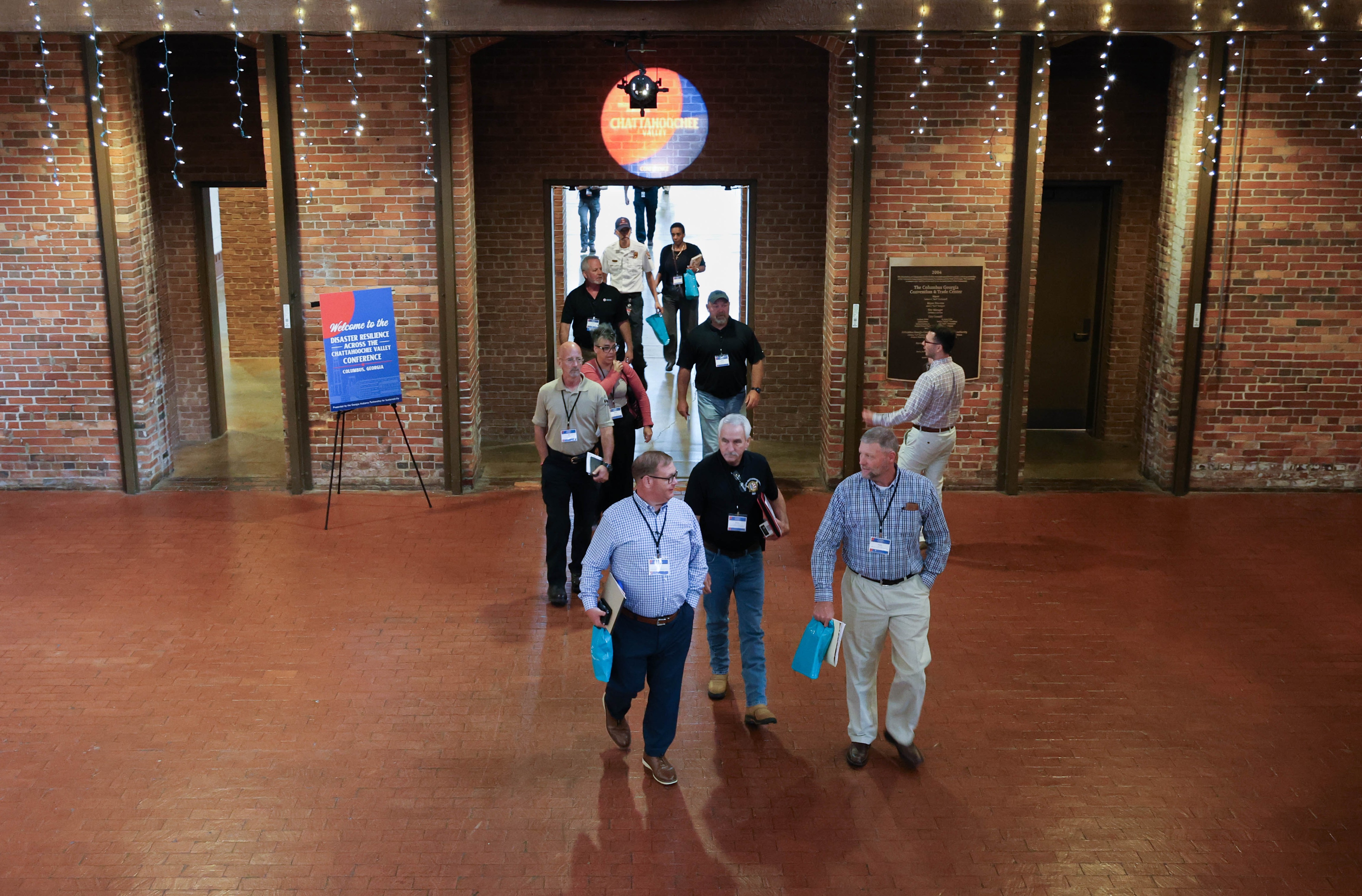
People enter the Disaster Resilience Across the Chattahoochee River Valley Conference
at the Columbus Georgia Convention and Trade Center. Charles Auer, Fort Benning, leads a session on the Fort Benning Installation Geospatial
Information and Services portfolio during the Disaster Resilience Across the Chattahoochee
River Valley Conference. People attend a plenary session at the Disaster Resilience Across the Chattahoochee
River Valley Conference.