From a housing study and a resiliency plan to a new park, three Georgia counties are transforming challenges to opportunities with help from the University of Georgia’s award-winning rural development program and now join a growing collective of legacy PROPEL communities.
PROPEL, or Planning Rural Opportunities for Prosperity and Economic Leadership, supports rural communities’ economic and community development through coaching and resources. Working with UGA faculty, staff and students over two years, key stakeholders identify and execute a long-term vision for their community’s economic future. The UGA Carl Vinson Institute of Government, a unit of UGA Public Service and Outreach, leads the program.
“Each county approached PROPEL with unique needs based on data and public input. They created their own individual programs of work to help advance their community economic development goals,” said Greg Wilson, Institute of Government associate director.
Crisp County: Opening lines of communication
When Crisp County joined PROPEL, stakeholders identified housing, infrastructure, youth engagement and downtown development as priorities to address. The community’s participation led to a housing study and research into infrastructure grants, plus collaboration with a developer on a new neighborhood in Cordele.
A team of UGA undergraduate students in the PROPEL Rural Scholars program also created rural museum case studies that stakeholders can use as they explore agritourism as part of downtown development.
Tim Powers, who served as PROPEL community team leader, said stronger communication among city, county and community leaders is one of the program’s biggest successes.
“Wins like this are really what we think will keep us going forward, sitting down at the same table and finding solutions together,” he said.

Cordele City Manager Angela Redding, left, and Downtown Cordele Director Monica Rentfrow work together at a Crisp County PROPEL meeting in Cordele.
Emanuel County: Evaluating and planning emergency response
Emanuel County stakeholders pivoted their original goals from economic development to community resilience after Hurricane Helene swept through the area, leaving behind impassable roads and a destroyed power grid.
“We had talked about tourism and housing at our first PROPEL meeting, but then Helene hit,” said Ken Warnock, CEO of Swainsboro-Emanuel Chamber of Commerce and Joint Development Authority. “The first thing that came out in our next meeting was that we needed a resiliency plan, and we needed our Institute of Government partners to help us develop one.”
PROPEL Rural Scholars led debriefing sessions with first responders, government staff, elected officials and other community leaders to identify response successes, opportunities for improvement and future needs.
Public Safety Coordinator Courtney Terwilliger said the county is using the compiled information to plan emergency supply purchases, such as water, food and tarps. They are also taking steps to acquire a building for storage and distribution of those supplies.

Emanuel County Public Safety Director Courtney Terwilliger, left, talks to PROPEL Rural Scholars about the county’s recovery efforts after Hurricane Helene.
Marion County: Honoring and sharing history
In Marion County, the steering committee focused on tourism. In March 2025, the county unveiled Federal Road Heritage Park near Buena Vista. The park commemorates the Old Federal Road, used by the Marquis de Lafayette during his 1825 farewell tour through the southern United States.
Jay Wells, Buena Vista area attorney and PROPEL committee member, credits the UGA Institute of Government and PROPEL with helping navigate the complex process of establishing the park. Through PROPEL, the county connected with UGA researchers and design experts as they worked with both The Nature Conservancy and Fort Benning on the project.
“Without PROPEL, we never could have put this park in place,” he said. “Our county could never have afforded the technical ask. UGA gave us everything we needed.”
The county is currently working on a public history project about baseball player and Marion County native Josh Gibson, as well as a regional branding project.

Signage at Federal Road Heritage Park details the Marquis de Lafayette’s role in the American Revolution and his travels through Georgia. (Photo by Ben McGarr, UGA)
Completing the PROPEL program doesn’t close a community’s partnership with UGA. Legacy communities continue to work with the Institute of Government on projects and share ideas with their peer communities through events like the annual PROPEL Ramble.
“In two years, we help communities build capacity, but many of these projects are long-term endeavors,” Wilson said. “We're excited to see these communities’ work continue and are here to support their efforts.”
PROPEL has received support from the Harley Langdale, Jr. Foundation, the UGA Foundation, USDA and the Southeast Crescent Regional Commission. The program has been nationally recognized for its contributions to the overall aesthetic and quality of life in rural communities.
Other legacy PROPEL communities include the Lower Chattahoochee Council of Governments (Quitman, Clay, Randolph and Stewart counties), plus Appling, Grady, Pulaski, Washington, Baldwin, Ben Hill, and Burke counties. Franklin, Haralson, Lamar, Elbert, Murray and Wayne counties are current PROPEL communities.
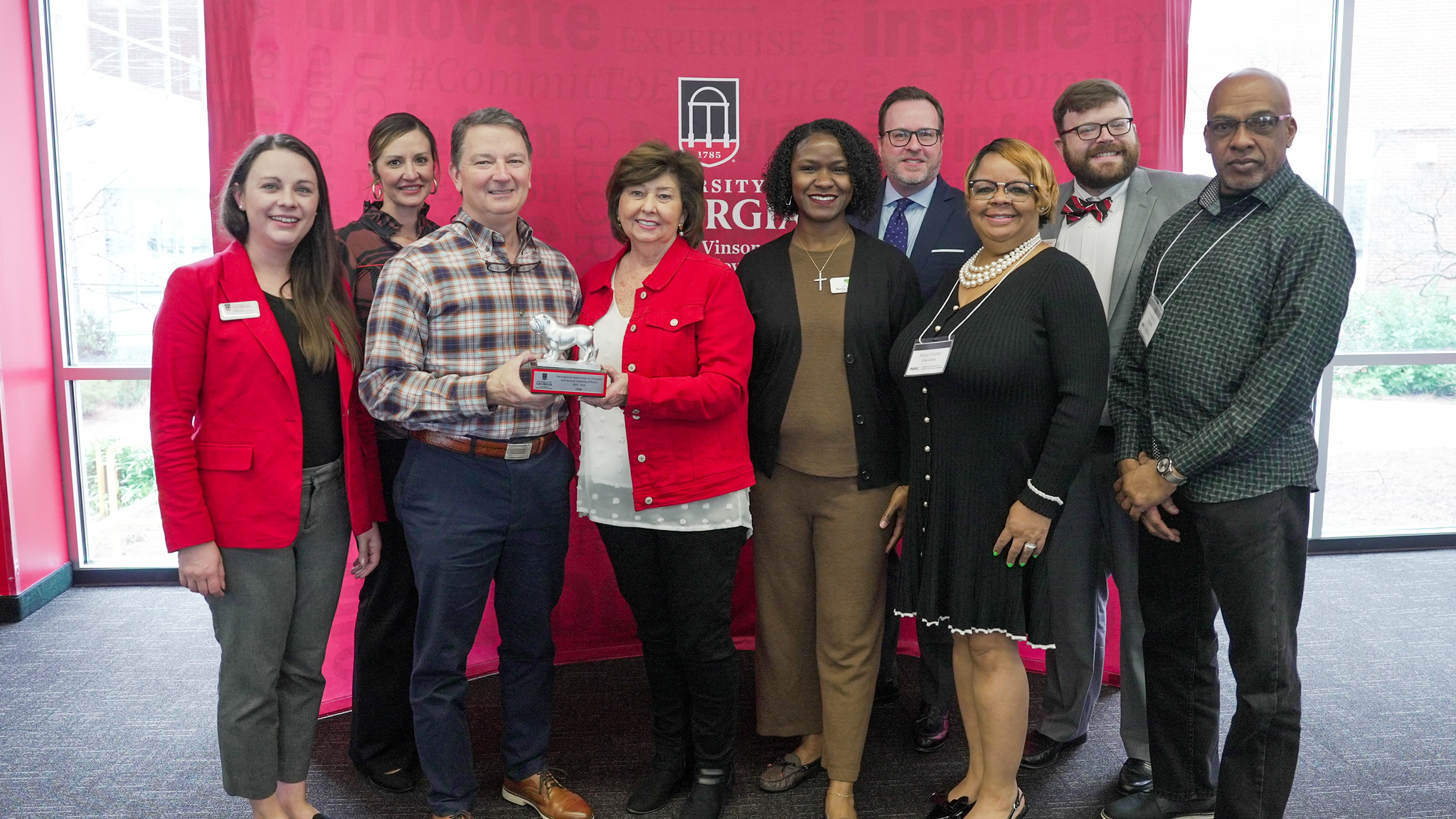
Crisp County was recognized for completing the PROPEL program. Left to right, Rebecca
Hunt (Institute of Government), Kameron Causey (PROPEL community team), Tim Powers
(PROPEL community team), Monica Simmons (PROPEL community team), Monica Robinson (PROPEL
community team), Rob Gordon (Institute of Government), Mary Darby (PROPEL community
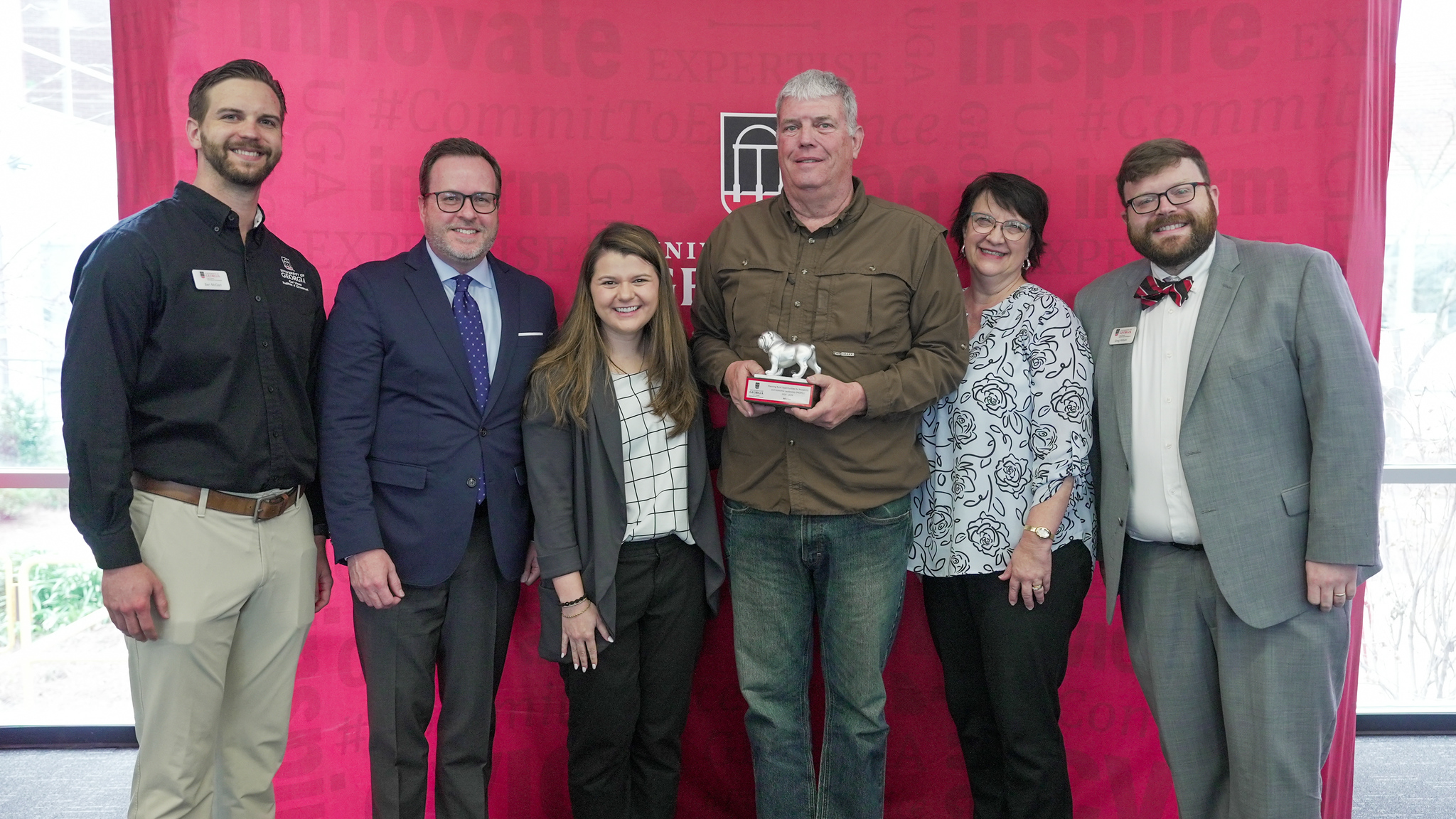
team), Greg Wilson (Institute of Government) and Maurice Hill (PROPEL community team). Emanuel County was recognized as a PROPEL legacy community at the 2026 PROPEL Forum
and Kickoff in Athens. From left to right, Rob Gordon (Institute of Government),
Ken Warnock (Swainsboro-Emanuel County Chamber of Commerce), Kristen Miller (Institute
of Government), Greg Wilson (Institute of Government). Marion County was recognized as a PROPEL legacy community. From left to right, Ben
McGarr (Institute of Government), Rob Gordon (Institute of Government), Madison Drummond
(Institute of Government), Jay Wells (PROPEL community team), Faye Wells (PROPEL community
team), Greg Wilson (Institute of Government).